By Frontline Uganda | Citizens Reporting
Uganda’s increasingly prominent succession debate has raised questions about political stability, the future of the ruling National Resistance Movement (NRM), the role of the military and the country’s preparedness for a possible leadership transition, with Hon. Abdul Katuntu warning that the absence of open communication is creating room for speculation and political uncertainty.
Speaking during a televised political discussion, Katuntu said closed-door meetings on the country’s political future, particularly when participants do not communicate their discussions publicly, inevitably encourage rumours, conflicting reports and speculation.
He observed that organisers of sensitive political meetings should understand the consequences of maintaining complete silence, arguing that even when discussions are confidential, some form of official communication is necessary to prevent misinformation.
Katuntu questions who will fill the political vacuum after Museveni
Reflecting on President Yoweri Kaguta Museveni’s lengthy stay in power, Katuntu argued that Uganda could experience political turbulence as the country approaches an eventual leadership transition.
He compared the situation to challenges that can emerge when long-serving and influential presidents prepare to leave office, noting that political organisations built around dominant personalities often face uncertainty about their future leadership.
Katuntu identified what he described as a leadership vacuum within the mainstream NRM political structures and sections of government.
He questioned whether there were sufficiently established contenders for national leadership among senior party officials and government figures, including the Vice President, Prime Minister, Deputy Prime Minister and parliamentary leadership.
According to Katuntu, the military appears to be one of the institutions with a comparatively clearer command structure, making its position particularly important in discussions about Uganda’s political future.
He also observed that several figures who played prominent roles in the original National Resistance Army (NRA) struggle no longer occupy positions within the current military command structure.

General Muhoozi emerges at the centre of succession discussions
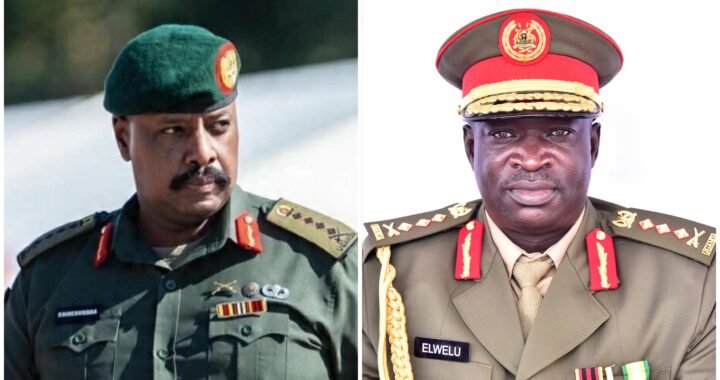
The discussion subsequently turned to Chief of Defence Forces (CDF) General Muhoozi Kainerugaba, whose name has increasingly featured in public conversations about Uganda’s political succession.
Edgar argued that Muhoozi had become a central figure in the debate, referring to a reportedly leaked six-page document in which the CDF’s name allegedly features prominently.
He said the document appeared to contain an assessment of Muhoozi’s suitability for greater leadership responsibilities and cited remarks attributed to President Museveni concerning his son’s military career and performance.
Edgar further suggested that the President’s comments amounted to an endorsement of assessing Muhoozi based on his capabilities and achievements rather than concentrating exclusively on procedural questions.
However, the discussion did not independently establish the authenticity or full contents of the reportedly leaked document.
Edgar traces Muhoozi’s alleged leadership grooming to the 1990s
Edgar also offered a historical account of what he described as Muhoozi’s early exposure to leadership activities, arguing that discussions about his political future did not emerge recently.
He referred to Muhoozi’s involvement in youth activities during the 1990s, including his alleged participation in producing Frontline Magazine alongside Romanika and the individual identified during the discussion as Justice Korius.
Edgar further recalled a youth conference in Kabale, reportedly organised by Andrew Menda around 1996 or 1997, where Muhoozi allegedly presented his views on democracy, economic development and the importance of building a strong indigenous middle class.
He also claimed that youth groups frequently visited State House to interact with Muhoozi and that President Museveni would sometimes invite him to address the groups.
According to Edgar, these historical engagements suggested that Muhoozi had been exposed to leadership responsibilities long before his current position as CDF.
These assertions were presented as Edgar’s recollections and interpretation of historical events.
Walugembe warns Uganda against taking peace and stability for granted
Prince John K. Walugembe cautioned that Uganda should approach the transition debate with considerable seriousness, warning that the country’s relative stability should never be taken for granted.
He recalled the difficult security conditions experienced in parts of Uganda before the current government came to power, including insecurity and reports of people being found dead.
Walugembe argued that younger generations who did not experience those historical circumstances might underestimate the consequences of political instability.
Drawing comparisons with countries such as Somalia and Sudan, he urged Ugandans to examine how political and governance challenges can affect countries that once enjoyed periods of relative stability.
He maintained that Uganda must carefully manage its political future to avoid undermining the stability achieved over the years.
Human rights concerns and political uncertainty could discourage investors
Walugembe argued that Uganda’s transition debate cannot be separated from broader concerns about human rights, the rule of law and the country’s economic environment.
He said investors require predictability and confidence that their investments will remain secure over the long term.
According to him, a country preparing for political transition must establish clear governance arrangements, encourage dialogue and provide certainty about its institutional future.
He warned that allegations of torture, abductions and threats undermine confidence and do little to improve Uganda’s investment climate.
Walugembe also connected the country’s political environment to the economic frustrations affecting younger Ugandans, particularly unemployment and the difficulty of creating sustainable business opportunities.
He argued that attracting investment requires an environment in which entrepreneurs and businesses can operate without unnecessary uncertainty.
He further raised concerns about Ugandans investing in property outside the country, including Kenya, suggesting that the broader investment climate deserved serious attention.
Walugembe rejects an imposed political succession
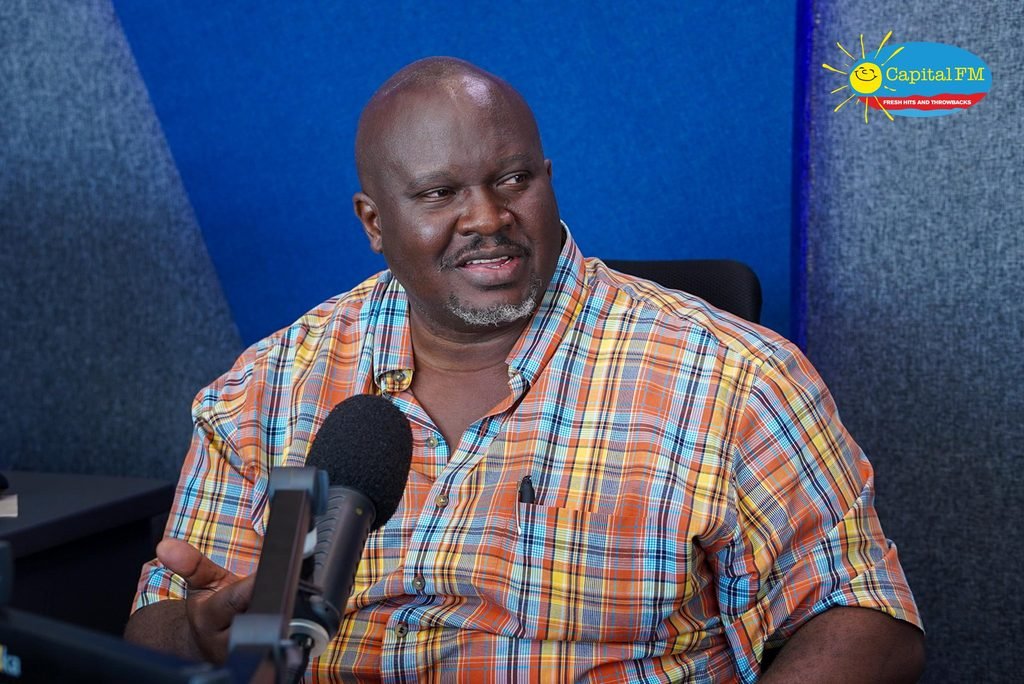
One of the strongest messages from Walugembe was his argument that Uganda’s next political arrangement cannot simply be imposed on the population.
Using a family inheritance analogy, he explained that failing to consult stakeholders before making major succession decisions can create disagreements and potentially serious conflict.
He argued that political legitimacy must be built through consultation rather than decisions presented to the public as predetermined arrangements.
Walugembe called for dialogue involving different sections of Ugandan society, emphasising that citizens and other stakeholders have a legitimate interest in determining the country’s future.
He maintained that a peaceful transition requires broad acceptance, institutional credibility and meaningful participation.
Lydia Wanyoto questions KCCA’s enforcement of building regulations
The discussion also shifted to Kampala’s building regulations, basement businesses, flooding and the enforcement responsibilities of Kampala Capital City Authority (KCCA).
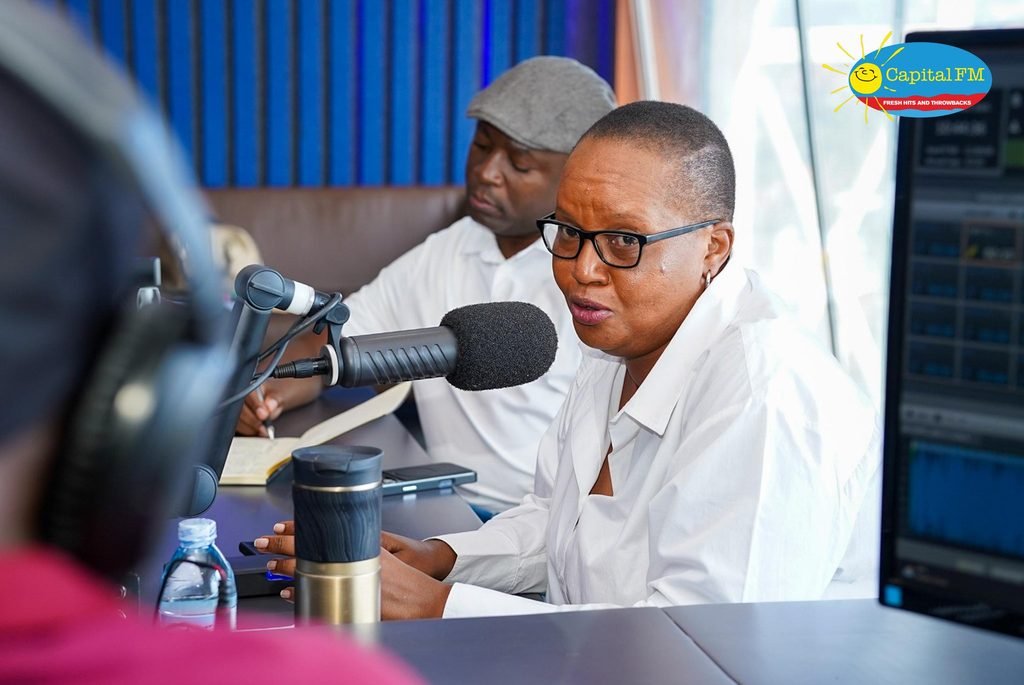
Lydia Wanyoto questioned the apparent gaps in enforcement, arguing that buildings cleared for occupation should not subsequently be subjected to unauthorised structural alterations or uses that contradict their approved purposes.
She questioned why enforcement officers were seemingly absent when developers and property owners made changes that could later expose occupants and businesses to safety risks.
Her concerns followed government discussions about basement businesses operating in buildings where such spaces were originally intended for parking.
The discussion referenced a Cabinet decision to provide approximately Shs18.99 billion in ex-gratia relief to 1,841 verified traders affected by flooding across 13 areas.
The proposed compensation was presented as part of efforts to support traders affected by the destruction of their merchandise.
However, the discussion raised a broader question: why should traders be allowed to establish businesses in spaces that were not originally approved for commercial activities?
Kampala’s flooding exposes wider governance and enforcement failures
The speakers argued that removing businesses from basement premises alone would not address Kampala’s recurring flooding challenges.
They pointed to concerns about buildings constructed in drainage corridors and properties that allegedly received approval despite being situated in areas vulnerable to flooding.
The discussion questioned how such developments could obtain clearance and subsequently become subjects of enforcement action.
It also raised concerns about buildings reportedly found to have structural or foundation-related problems after receiving approvals.
The central issue, therefore, was not simply the removal of basement businesses but the effectiveness of the planning, approval, inspection and enforcement systems responsible for regulating urban development.
The discussion concluded with a broader governance question about institutional accountability and whether regulatory authorities are adequately enforcing the laws and standards they are mandated to uphold.
Uganda’s transition debate demands dialogue and institutional accountability
The discussion highlighted the growing intersection between Uganda’s political succession debate, military influence, human rights, economic confidence and institutional governance.
While Edgar presented a historical argument about Muhoozi’s alleged preparation for leadership, Katuntu questioned the apparent absence of clearly established political contenders within the ruling party and government.
Walugembe, meanwhile, emphasised that Uganda must protect its stability through dialogue, respect for the rule of law and an inclusive approach to political change.
The speakers’ contributions reflect competing perspectives on the country’s political future, but they converge on an important question: how can Uganda manage an eventual leadership transition without undermining national stability, democratic institutions and economic confidence?
For a country whose political direction has been shaped by one president for decades, the question of succession is increasingly difficult to ignore.
Frontline Uganda | Citizens Reporting